© 2026 Web Design by Saad | All Rights Reserved
Dallas, USA
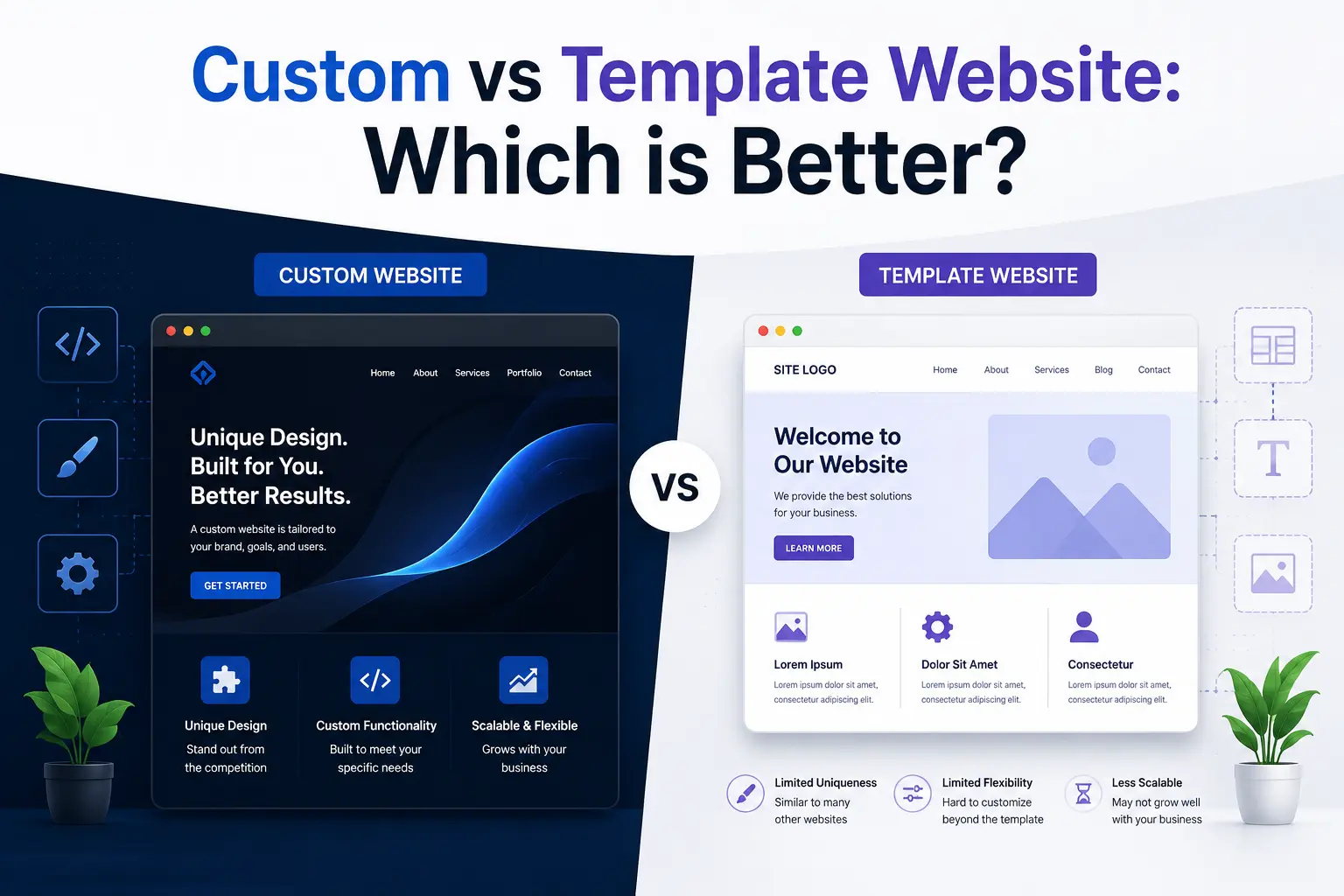
Custom vs Template Website: Which is Better?
It can’t be said which one is better, as it depends on business size, requirements, and long-term growth. Templates are good for basic websites that are developed for small businesses and startups. Businesses with a tight budget that need the project as soon as possible. At the same time, custom websites are best for growing and established businesses. The ones that need frequent updates, conversion-focused, and a unique design to stand out among competitors.
Whatever your business type and size, you need a website to reach your target audience and build your brand’s credibility. In the competitive digital landscape of Dallas, your website is the only thing that will make you stand apart and meet your long-term needs. But businesses usually get confused about whether to use a custom design or a template-based one. The type of design really impacts the first impression your website provides. If you need immediate results and possess a tight budget, you can choose a template website, but if you need a scalable, conversion-focused, and unique website with professional features and organised layouts, then you have to choose a custom website. The businesses that already have a profound name and ability to grow and evolve must select a customised website, as templates may feel generic and familiar. To make the right choice for your business among the two options, explore the article below.
What can you expect from a template-based website
A template is an already crafted design that can be modified according to your business identity. You can add colours, change the fonts, edit images, and modify the content according to your needs. On these websites, you don’t have to design from scratch. Many website builders and CMS tools use template designs to help startups and small businesses to craft their online identity. The following are some website builders and CMS tools that can help even a layman to develop a good website:
-
WordPress
-
Shopify
-
Wix
-
Webflow
-
And so on
What are the benefits of templates
Affordable:
Multiple businesses can use templates that need affordable websites. It is because these sites carry little labour work as ready-made designs are used. It can help them craft a specialised website without spending too much.
Fast launch:
they can be launched faster as compared to other websites because everything is already designed, and the designer and developer only need to work on uploading content, making adjustments, modifying images, and other customisations according to the type of business.
Beginners can use it easily:
it means that business owners can easily change anything on their website if templates are used without possessing technical knowledge. They don’t have to rely on developers for small matters such as text upload and editing, image upload, changing colours, etc.
Variety in design available:
multiple types of designs are available for different types of businesses. They can choose them according to their brand identity and needs.
The drawbacks they carry
They can have some drawbacks that allow the owner to think twice.
Limitation to customise:
as they are made in a variety and large numbers for different businesses, it may feel hard to customise them according to your needs, and this will lead to problems when scalability is necessary. You might find it hard to customise them for layouts, advanced features, animations, extraordinary user experience, etc.
Familiar designs:
as designs are ready-made, many businesses might have used them before, so they look similar and can damage your brand identity. Customers can lose trust in your website by remembering similar designs seen somewhere else.
Performance problems:
they can involve large code options for multiple images that can slow down the website’s speed. Unnecessary features can damage the optimisation and SEO performance. If speed is low, your rankings will become low, and user experience will be affected.
Scalability problems:
basic sites can work well with templates, but if you need to expand your business on a broader scale, they will cause difficulty as they are not scalable.
What can you expect from custom sites
These websites are designed and developed from scratch as they don’t possess ready-made designs. Businesses that need a unique presence and professional identity according to their target audience, brand goals, and long-term functionality should use customised websites. The designer and developer will research and plan everything based on your brand’s story and values so that you stand out from your competitors. The factors associated with customised designs are:
-
UI/UX design, personally yours
-
Wireframing
-
Custom coding
Customised functions
Performance optimisation
SEO-friendly website
The benefits of custom designs
Unique branding:
custom designs will use the brand-specific colours, layouts, typography, images, and animations so that they reflect your story and objectives entirely. Users will resonate with it as it will be designed according to their behaviour. The custom designs increase user trust and loyalty in your brand and become memorable for them. They can easily distinguish you from your competitors.
Enhanced user experience:
the designer will design the site based on user expectations and needs. They will match their thoughts with your website and increase their engagement. Developers can optimise the following elements in a customised website navigation, conversion funnels, mobile optimisation, customer experience, and page structure.
Strong SEO optimisation:
SEO-friendliness works ideally on custom websites because the clean code is used, speed can be optimised, clear URLs, and schema markup can be used.
Scalable and flexible:
as the business grows over time, the website should scale too. Hence, using customised websites can help you add more features and make it more advanced. The custom designs make the site flexible to change, adapt, and evolve.
Enhanced speed:
speed is directly related to customisation, as designers can easily add features that can increase the speed. These include SEO, user experience, mobile optimisation, and fast-loading speed. Fast websites increase customer trust and loyalty, therefore increasing the conversion rates.
Enhanced security measures:
as personalised designs are used, security can be enhanced. Custom websites possess a large number of plugins and themes that can save you from potential harm.
their drawbacks
They have disadvantages too that are mentioned below:
They are expensive:
it needs a labour that should be experienced, expert, and give quality designs. Moreover, they take more time and effort to be designed through an organised planning and development.
They need more time to develop:
the process can take a long time to complete, as everything needs to be built from scratch. The timeline can vary according to the requirements.
An experienced team is needed:
to craft a professional, well-organised, and premium website, experts are needed who will charge more for their experience and expertise.
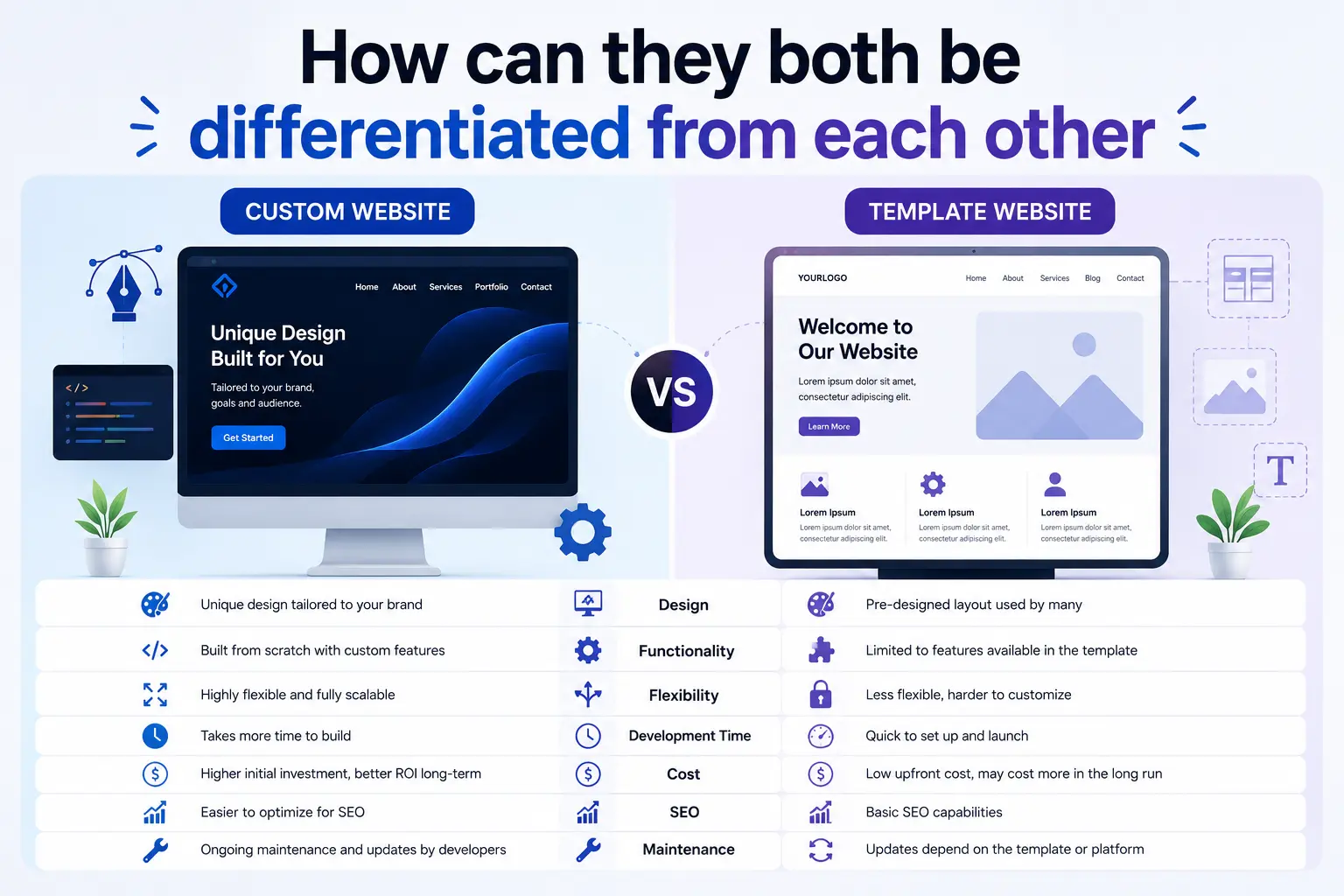
How can they both be differentiated from each other
Design ease:
Template-based designs are limited to customisation and functionality due to static layouts, while custom websites possess increased creativity, personalised designs, and user experience. So custom designs are better.
Cost:
template designs are budget-friendly, while custom designs are expensive initially and need a budget for long-term performance. For affordability, templates are best.
Time to develop:
templates are better for efficient results and delivery time as they are ready-made and need fewer modifications, while custom designs take time to develop.
Search engine optimisation:
templates have basic SEO optimisation, while custom designs can tackle advanced SEO and can have more optimisation offers.
Performance:
templates are not ideal if performance is a concern, as they contain unnecessary features and code that can slow down the speed. While custom websites have optimized coding and a clean structure that offers a better workflow.
Scalability:
templates are difficult to scale as they are ready-made and not ideal for growing businesses, whereas custom designs have options for unlimited scaling as businesses tend to grow.
The Web Designer Dallas offers exclusive custom designs for business expansion, and that too at affordable rates.
How to make the right choice between custom and template websites
You need to know about the following factors to decide which option is better for your business:
Your budget:
if you are financially under pressure and can’t afford much, then templates are the right option to get started.
Branding importance:
if you want to stand out prominently and beat your competitors, then you need a custom website.
The timeline you need:
if you want your website quickly in your hands, then you should opt for a template website, but if you can wait and want a professional and personalised approach, then use a custom design.
Need high ranks and visibility:
if you need high ranks and marketing of your business, then choose custom websites as they offer an SEO-friendly structure. They can be easily optimized for search engines.
Whether you need a template-based design or a custom one, choosing Web Design by Saad is the best option.
Conclusion
It can never be a template website or a custom one, as the choice depends on your budget, business needs, type, and target audience. If you possess a professional and growing business, you need scalability, an SEO-friendly structure, and a fast-loading website. But if you possess a startup and have a tight budget, then you should go for template design. Make sure to decide strategically and logically, as it will directly impact your brand identity, user engagement, conversion rates, and long-term growth.
FAQ's
Can I shift from templates to a custom website ?
+Can I manage my own website if I have custom designs ?
+How can I choose between the two ?
+





Leave a Reply